

 See My Latest Article on HelloNation
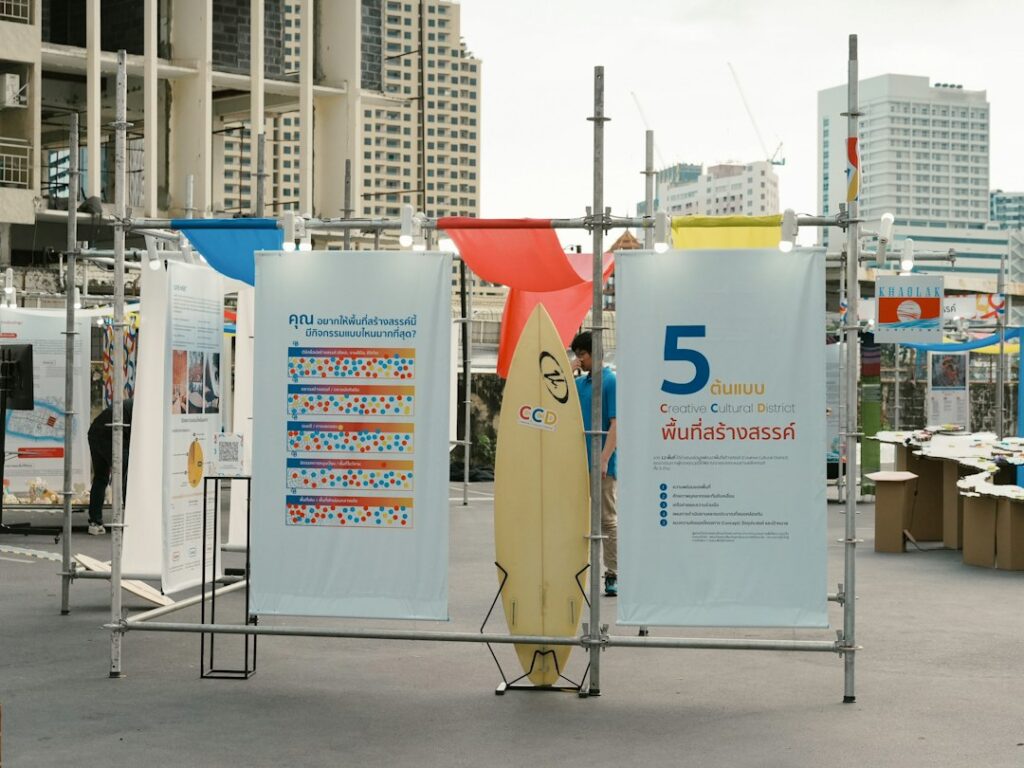
Retractable banners can be a useful choice for businesses, organizations, schools, and event exhibitors that need temporary, portable messaging. They are especially practical when a sign must be set up quickly, moved between locations, or stored between uses. They are less suitable for permanent outdoor identification, high-wind conditions, or situations where viewers will be far away.
What is a retractable banner?
A retractable banner is a printed graphic that rolls into a lightweight base for storage and transport. Two support poles typically hold the graphic upright when it is extended. After an event or presentation, the banner can be lowered into the base again.
Most retractable banners are designed for indoor use. Common applications include:
- Trade shows and professional gatherings
- School events and community programs
- Lobby announcements
- Temporary directions
- Product or service information
- Registration areas
- Seasonal displays
- Presentations in meeting rooms or public buildings
The main appeal is convenience. A retractable banner usually takes only a few minutes to assemble and does not require wall mounting, drilling, adhesive, or permanent hardware.
Are retractable banners right for every business?
No. Their usefulness depends on the setting, the message, and how long the display must remain in place.
A retractable banner may be a good fit if the business needs a sign that is:
- Portable
- Reusable
- Easy to store
- Quick to set up
- Suitable for indoor events
- Visible from a relatively short distance
A different sign type may be more appropriate if the goal is permanent identification, exterior visibility, vehicle recognition, or long-distance communication. A retractable banner is generally not a replacement for a building sign, parking sign, window graphic, or code-required notice.
The format works best as a temporary communication tool rather than as a permanent part of a property.
What are the main advantages?
The strongest benefit is flexibility. A single banner can be used at several indoor events instead of being installed in one fixed location.
Retractable banners are also relatively easy to transport. When stored in the base with a protective case, they can fit in a vehicle or storage closet without taking up much room. This can be helpful for organizations that attend occasional events rather than maintaining a permanent display area.
Other advantages include:
Fast setup
Most models can be assembled without tools. The base is placed on a level surface, the support pole is inserted, and the graphic is raised carefully.
Consistent presentation
A professionally laid-out banner can provide a clean, organized backdrop or information point. It can help visitors recognize a registration table, presentation area, or temporary service station.
Reusability
If the message remains accurate, the banner can be used repeatedly. This may reduce the need to create a new display for every indoor event.
Minimal surface impact
Unlike wall-mounted signs, retractable banners generally do not require fasteners, adhesive, or modifications to the building.
What are the drawbacks?
Retractable banners have limits that are easy to overlook. The base can be stable on a flat floor, but the extended graphic may still move when exposed to air currents, crowded walkways, fans, or open doors.
They are also vulnerable to rough handling. Pulling the graphic upward at an angle, forcing the support pole, or allowing the banner to snap back into the base can damage the mechanism.
Other drawbacks include:
- Limited stability outdoors
- Narrower viewing area than a large wall or rigid sign
- Potential curling or wrinkling over time
- Difficulty replacing outdated graphics on some models
- Reduced visibility in crowded rooms
- Sensitivity to uneven floors
- Possible glare from overhead lighting
In Columbia, SC, indoor use is often the safer choice because heat, humidity, sudden storms, and changing outdoor conditions can affect the printed material and the rolling hardware. Even on a calm day, an outdoor banner can become unstable if wind passes through an entry area or covered walkway.
How should the message be designed?
A retractable banner should be readable within a few seconds. Visitors often see it while walking, standing in line, or moving through a busy room.
The most useful design practices are simple:
- Place the main message near eye level.
- Use large type with strong contrast.
- Keep the amount of text limited.
- Separate the headline from supporting details.
- Use clear spacing around important information.
- Avoid placing essential wording near the bottom, where it may be blocked by tables or people.
- Use images only when they support the message.

A common mistake is treating the banner like a brochure. Long paragraphs, small contact details, and too many separate messages can make the display difficult to understand.
The banner should answer one primary question: What does a person need to know here?
If the display is being used for directions, the wording should be direct. If it is being used for an event, the date, purpose, and location should be easy to find. If the message may remain in use for years, avoid details that will become outdated quickly.
Can retractable banners be used outside?
Some retractable banners may be used outdoors briefly, but standard models are usually not intended for extended outdoor exposure. Wind is the main concern. A banner can tip, bend, or suffer internal damage even when the printed material appears durable.
Outdoor use also exposes the banner to:
- Moisture
- Direct sunlight
- Dirt and pollen
- Temperature changes
- Uneven pavement
- Accidental contact from pedestrians
A sheltered outdoor area may reduce some risks, but it does not make a lightweight banner suitable for every condition. The base should never be treated as a substitute for a weighted outdoor sign system when people, vehicles, or strong wind are nearby.
For public events, placement matters as much as construction. A banner should not block exits, narrow an accessible route, obstruct required notices, or create a tripping hazard.
How long do retractable banners last?
Service life varies based on construction, frequency of use, storage, and handling. A banner used indoors a few times each year may remain presentable for a long period. A banner transported weekly or exposed to direct sunlight may show wear much sooner.
Proper care helps:
- Store the banner fully retracted.
- Use a protective case during transport.
- Keep it away from excessive heat and moisture.
- Carry the base instead of dragging it.
- Raise and lower the graphic slowly.
- Inspect the support pole before each use.
- Wipe dust from the exterior with a soft, dry cloth.
Do not force a graphic that has become stuck. The internal spring and printed material can be damaged by pulling sharply.
What should be considered before purchasing one?
The most important questions are about use rather than appearance:
1. Will the banner be used indoors or outdoors?
2. How often will it be transported?
3. Will viewers stand close enough to read it?
4. Does the message need to change regularly?
5. Will the banner be placed near doors, fans, or crowded walkways?
6. Is the floor level and stable?
7. Must the display meet building, event, or accessibility requirements?
8. Is the information temporary, seasonal, or long-term?
A retractable banner is usually a sensible option when portability and quick setup matter more than permanent durability. It becomes less practical when the sign must withstand weather, remain unattended, communicate from a distance, or serve as a legally required notice.
How can a business decide?
The basic decision is straightforward: choose a retractable banner for portable indoor messaging, and choose another sign format for permanent, exterior, structural, or high-visibility needs.
For a local organization in Columbia, SC, the most reliable use is often inside a lobby, meeting space, classroom, event hall, or temporary registration area. A well-designed banner can clarify information without altering the building. Its value comes from matching the format to the situation, keeping the message focused, and handling the display carefully between uses.